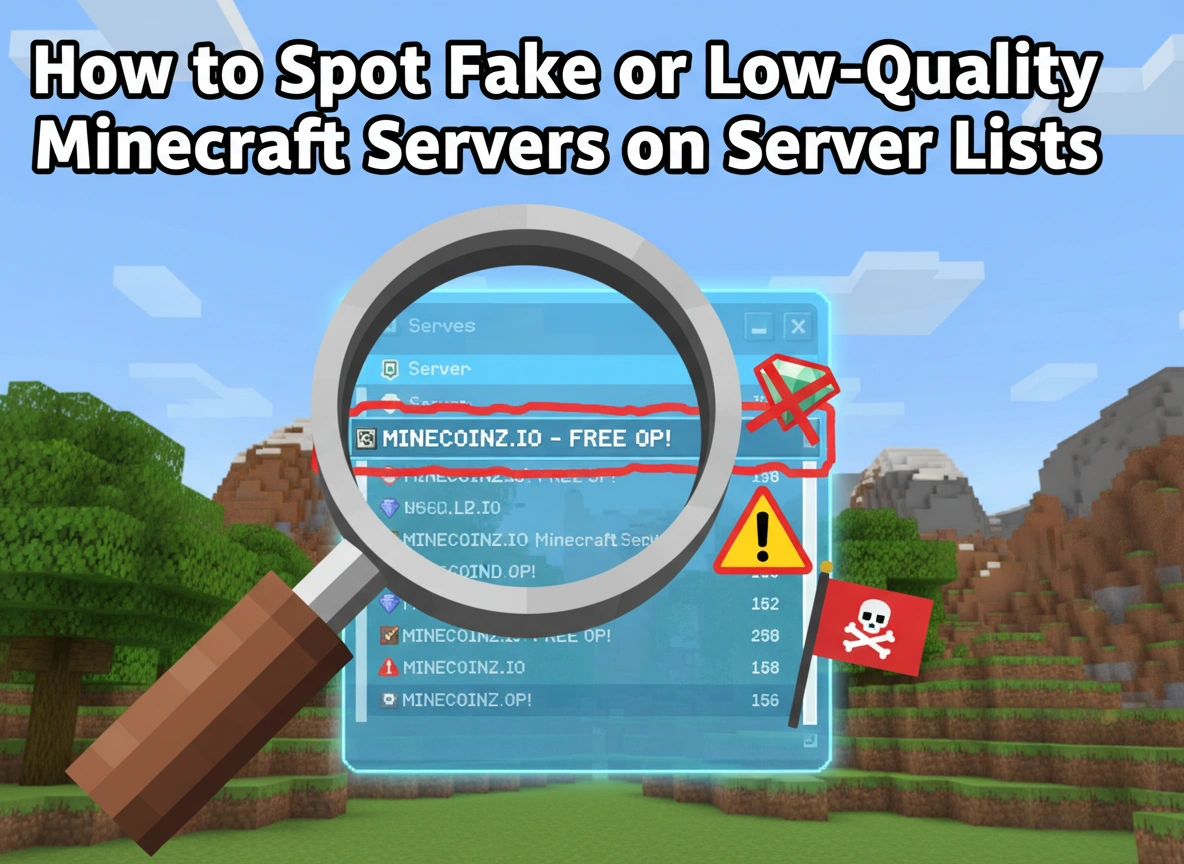
Minecraft offers one of the most expansive and dynamic multiplayer experiences in gaming history. Thousands of unique communities exist across the globe, offering everything from intense player-versus-player combat to relaxing survival builds. However, navigating public server lists can feel like walking through a minefield. You click on a promising link, load up the game, and suddenly find yourself in a barren wasteland, a lag-heavy hub, or a massive advertisement begging for your credit card details.
Finding a reliable and high-quality place to play requires a sharp eye. Server lists often push heavily monetized or artificially inflated networks to the top of their rankings, burying the genuine communities underneath. Understanding how to filter out the noise saves you valuable time and protects your computer and wallet from predatory practices. We want you to enjoy the best the game has to offer. By learning a few key identifiers, you can quickly separate the worthwhile communities from the fakes.
Why Fake Servers Exist
To understand how to spot a bad server, you must first understand why they populate server lists in the first place. The primary motivator behind fake or low-quality networks is financial gain. Running a top-tier Minecraft network costs money, but running a cheap, copy-paste hub costs next to nothing. Operators of low-quality networks aim to maximize their return on investment by exploiting players.
Many of these operators utilize aggressive monetization tactics, commonly known as pay-to-win models. They set up basic, uninspired game modes and lock all meaningful progression behind expensive premium ranks and loot boxes. To get players into these stores, they need foot traffic. They manipulate server lists by artificially inflating their player counts to appear at the top of the page. When you sort by “most players,” you often see these networks first.
Another reason these servers exist revolves around network redirection. Some server owners create dozens of fake listings with different names and descriptions. When you connect to any of these IP addresses, the system funnels you into a single, centralized hub. This creates the illusion of a massive network when, in reality, it is just one small community using deceptive marketing tactics to siphon traffic from legitimate server owners.
Finally, a small minority of these servers exist for malicious purposes. While the game client is generally secure, malicious operators can use servers to collect IP addresses, phish for user credentials, or distribute links to malicious software through in-game chat and Discord servers. Recognizing these traps early keeps your personal data secure.
Signs of a Fake or Low-Quality Server
Identifying a subpar Minecraft server becomes straightforward once you know the common red flags. Keep an eye out for these distinct warning signs before you invest hours of your time into a new community.
Spoofed Player Counts
The most common deception on server lists involves spoofing player numbers. A listing might display 5,000 active players, but upon joining, the hub feels like a ghost town. Server owners use plugins to generate fake offline players or bots that idle in the lobby. If you press the “Tab” key to view the player list and see hundreds of names with generic formatting, no profile pictures, or names that look like random strings of letters, you are likely looking at bots. Furthermore, if a server claims to have thousands of players but the global chat is completely silent, the numbers are undoubtedly fake.
Generic or Stolen Assets
High-quality communities invest time in creating custom spawn areas, unique logos, and well-written server descriptions. Low-quality servers take the easy route. If you log in and recognize the spawn building from a popular free download site, or if the server uses the exact same layout as five other networks you visited that day, proceed with caution. Copy-paste servers rarely offer long-term stability. The operators usually lack the technical skills to fix bugs or develop engaging new content.
Aggressive Monetization and Chat Spam
When you join a server and the first thing you see is a giant holographic text display urging you to buy a “Titan Rank” at a 90% discount, you should lower your expectations. Low-quality servers prioritize store purchases over gameplay. Their chat boxes constantly spam automated messages linking to the web store. They feature loot crate keys that give paying players massive advantages over free players. A server that treats you like a walking wallet rather than a player will rarely provide a balanced, enjoyable experience.
Lack of Active Staff or Moderation
A healthy community requires active moderation to handle rule-breakers, toxic behavior, and technical issues. Low-quality servers often lack a dedicated staff team. You might notice rampant spam in the chat, players openly cheating without consequence, or questions going unanswered for hours. If the server relies entirely on automated chat filters and has no visible moderators, the community will quickly turn toxic.
Terrible Performance and Lag
Performance issues act as a glaring indicator of a low-quality environment. When a server owner prioritizes profit over the player experience, they usually cut corners on hardware. If you experience constant rubber-banding, delayed block breaking, or slow chunk loading, the server lacks the processing power to handle its player base. You can test this by checking the server’s TPS (Ticks Per Second). A healthy server runs at a smooth 20 TPS. If the gameplay feels sluggish, the operator is likely running too many plugins on cheap hosting.
How to Verify a Server’s Authenticity
Spotting the red flags helps you avoid the worst offenders, but you also need strategies to confirm that a server is actually worth your time. Take a proactive approach to verify a community’s authenticity before you decide to build your permanent base there.
Check External Forums and Reviews
Do not rely solely on the server list’s voting system. Server owners often incentivize players to vote daily by offering in-game rewards, which skews the ratings. Instead, look for reviews on independent gaming forums or social media platforms like Reddit. Search for the server’s name alongside keywords like “review,” “pay to win,” or “lag.” Honest feedback from former or current players provides a much clearer picture of how the server operates behind the scenes.
Investigate the Community Platform
Almost every legitimate Minecraft server Lists maintains a Discord server or a dedicated website forum. Join their community platform before you even launch the game. Check the general chat channels. Are players having genuine conversations, or is the chat completely dead? Look at the announcement channels to see how often the developers release updates. A thriving, active Discord with transparent communication from the administrative team strongly indicates a high-quality server.
Analyze the Web Store
Take a few minutes to browse the server’s online store. Read the descriptions of the ranks and items available for purchase. If the store sells administrative commands, unbans, or items that give impossible advantages in competitive game modes, you should walk away. Legitimate servers usually adhere to the game’s End User License Agreement (EULA), which strictly prohibits selling items that provide an unfair gameplay advantage. Servers that respect these rules tend to foster fairer, more enjoyable communities.
Test the Waters Off-Peak
A server might run perfectly when only ten people are online, but completely buckle under the pressure of peak weekend hours. Alternatively, a server might look busy on a Saturday afternoon but remain completely abandoned for the rest of the week. Spend a few days logging in at different times to gauge the true activity level and performance. If the community remains consistent and the server runs smoothly regardless of the time of day, you have found a solid place to play.
Conclusion
Finding the perfect Minecraft server requires patience and a discerning eye. The server lists contain countless fake, heavily monetized, and low-quality networks designed to extract your time and money. By understanding why these deceptive servers exist, you equip yourself with the knowledge to bypass them entirely.
Always remain vigilant for spoofed player counts, copy-paste spawn builds, and overly aggressive monetization strategies. Take the extra step to verify a server’s authenticity through external reviews, community Discord activity, and a thorough check of their web store. When you apply these practical tips, you protect yourself from frustration and increase your chances of finding a welcoming, high-quality community where you can truly enjoy your gaming experience.
