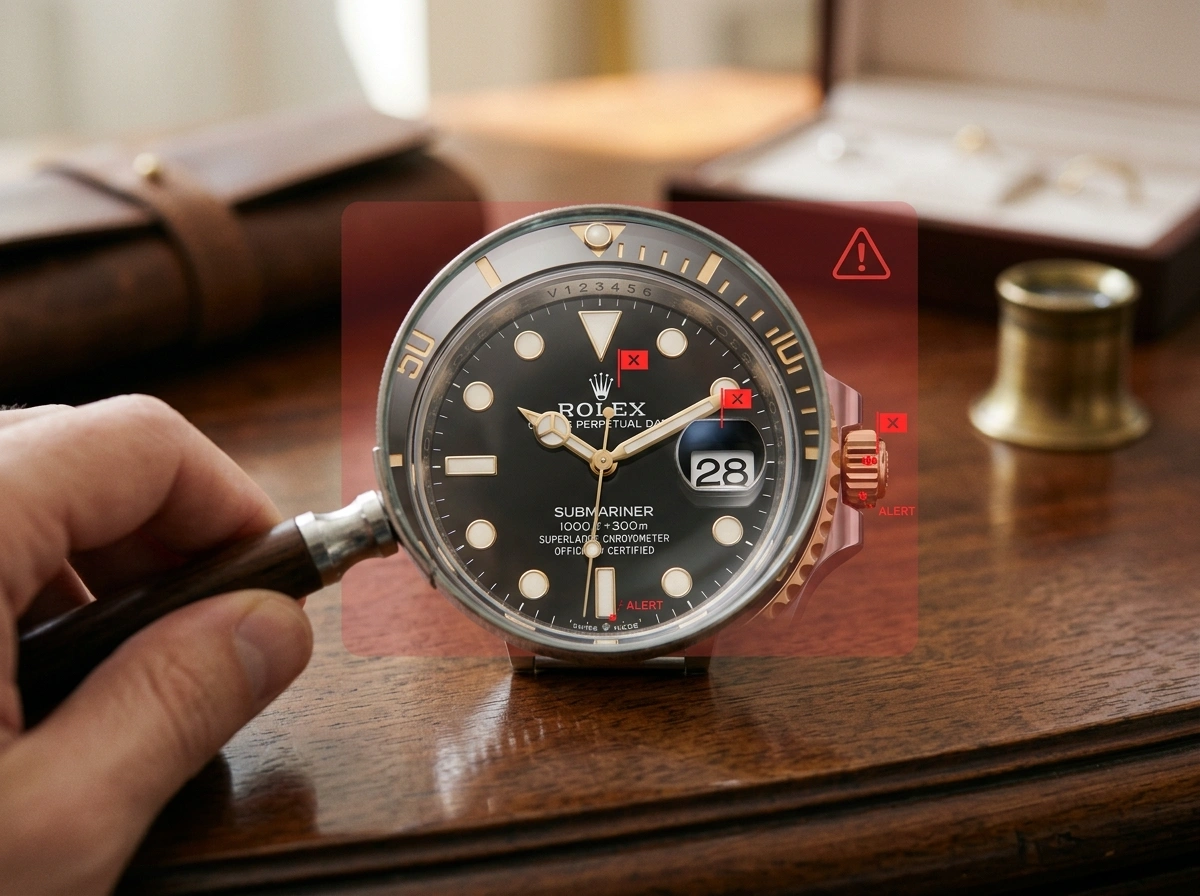
Rolex is more than a watch. It’s a statement of quality, heritage, and craftsmanship that holds its value for decades. That reputation is exactly why counterfeiters work so hard to copy it. Across the United States, the market for replica timepieces has grown alongside online marketplaces, social media shops, and pop-up sellers. Some fakes are crude and easy to spot. Others are sophisticated enough to fool casual buyers and even seasoned collectors.
If you’re shopping for a luxury watch, knowing the warning signs can save you thousands of dollars and a lot of heartache. Below, we break down the most common red flags to watch for when you come across listings for Fake rolex watches for sale, so you can shop with confidence and protect your investment.
Why Spotting Fakes Matters
Counterfeit watches don’t just cost you money. They can expose you to fraud, void any chance of resale value, and in some cases involve you in transactions that break federal and state laws against trafficking counterfeit goods. A genuine Rolex is a long-term asset. A fake is a liability dressed up to look like one. Learning the differences puts the power back in your hands.
Suspiciously Low Prices
The oldest trick in the book is also the most effective. If a deal looks too good to be true, it almost always is.
A pre-owned Rolex Submariner typically sells for several thousand dollars, depending on the model and condition. So when you see a “brand new” Rolex listed for a few hundred dollars, your alarm bells should ring immediately. Authentic Rolex watches hold their value remarkably well, and authorized dealers rarely discount them.
Watch out for sellers who pressure you with phrases like “limited stock,” “today only,” or “wholesale direct from the factory.” Rolex does not sell wholesale to random online shops. Steep discounts paired with urgency are classic signs of a scam.
Poor Craftsmanship Details
Rolex is obsessive about quality. Counterfeiters cut corners, and those corners show up in the details if you know where to look.
Case Finishing
Genuine Rolex cases are machined to exacting standards. The brushing is even, the polished surfaces are flawless, and the edges feel crisp and precise. Fakes often have rough edges, uneven finishing, or visible tool marks. If a case feels lightweight or hollow, that’s another warning sign. Real Rolex watches are made from dense materials like 904L stainless steel and feel substantial in the hand.
Dial Printing
The dial is where many counterfeits fall apart. On an authentic Rolex, the printing is razor-sharp, perfectly aligned, and consistent. Look closely at the text. Blurry letters, uneven spacing, smudged ink, or slightly off-center logos all point to a fake. The applied markers should be polished and securely set, never crooked or glued sloppily.
Crown Logo
The iconic five-pointed crown is one of the hardest details to fake correctly. On genuine models, the crown is finely detailed and proportioned. Counterfeit versions often look chunky, asymmetrical, or poorly defined. Modern Rolex watches also feature a tiny laser-etched crown on the crystal at the six o’clock position. It’s nearly invisible to the naked eye and very difficult to replicate. If it’s missing or looks crude under magnification, be cautious.
Inaccurate Movement Sounds
Here’s a test counterfeiters struggle to pass. Hold the watch to your ear. A genuine Rolex uses a mechanical automatic movement with a sweeping second hand that glides smoothly around the dial. It produces a soft, almost silent tick.
Many fakes use cheap quartz movements, which cause the second hand to tick in distinct one-second jumps. Others use low-grade mechanical movements that produce a loud, clunky ticking sound. If the second hand stutters or the watch sounds noisy, you’re likely holding a replica.
Missing or Inaccurate Serial and Model Numbers
Every authentic Rolex carries a unique serial number and a model (or reference) number. On modern watches, these are finely engraved between the lugs and on the rehaut (the inner bezel ring).
Red flags include:
- Numbers that are shallow, uneven, or sandblasted in appearance
- Missing serial or model numbers entirely
- Numbers that don’t match the paperwork
- Duplicate serials that show up across multiple listings online
A quick way to verify is to research the reference number and confirm it matches the watch’s design and production year. Mismatches are a clear sign something is wrong.
Unverified Sellers
Where you buy matters just as much as what you buy. The safest route is always an authorized Rolex dealer or a reputable certified pre-owned specialist.
Be wary of:
- Sellers with no verifiable history or reviews
- Social media accounts that were created recently
- Profiles with stock photos instead of real product images
- Sellers who refuse video calls or live photos of the actual watch
- Anyone insisting on payment through untraceable methods like wire transfers, gift cards, or cryptocurrency only
Legitimate sellers welcome questions, provide detailed photos, and offer buyer protection. If a seller dodges your requests or rushes you, walk away.
Missing Documentation
A genuine Rolex usually comes with its original box, warranty card, and supporting paperwork. While some authentic pre-owned watches lose their documentation over the years, a complete set adds credibility and value.
Be skeptical when:
- The warranty card details don’t match the watch
- Documentation looks photocopied or low quality
- The serial on the papers differs from the watch itself
- The seller claims papers were “lost” but the price is still premium
Always ask for the full provenance. Reputable dealers can often trace a watch’s history and confirm its authenticity.
Unrealistic Deals Online
Online marketplaces have made luxury watches more accessible, but they’ve also become a playground for scammers. Beyond pricing, watch for listings that use vague descriptions, recycled photos pulled from other sites, or terms like “AAA quality,” “mirror grade,” or “replica” buried in the fine print. Those words are dead giveaways.
Reverse image search is your friend. If the same photo appears across dozens of unrelated listings, the seller likely doesn’t own the watch at all. Stick to platforms with strong buyer protection, and never finalize a high-value purchase outside of a secure payment system.
How to Protect Yourself
A few smart habits go a long way:
- Buy from authorized or certified dealers whenever possible.
- Request a professional authentication from an independent watchmaker before paying.
- Inspect the watch in person or via live video.
- Verify serial and reference numbers against trusted databases.
- Use secure, traceable payment methods that offer recourse if something goes wrong.
- Trust your instincts. If something feels off, it probably is.
Final Thoughts
Buying a Rolex should be an exciting milestone, not a gamble. The counterfeit market is sophisticated, but it isn’t unbeatable. By learning to recognize the red flags — unbelievable prices, sloppy craftsmanship, suspicious movement sounds, missing numbers, shady sellers, and incomplete documentation — you arm yourself with the knowledge to shop wisely.
Take your time, do your research, and never let pressure tactics rush your decision. A genuine Rolex is a lifetime investment worth protecting. When you know what to look for, you can browse with confidence and walk away with a timepiece that’s the real deal.
