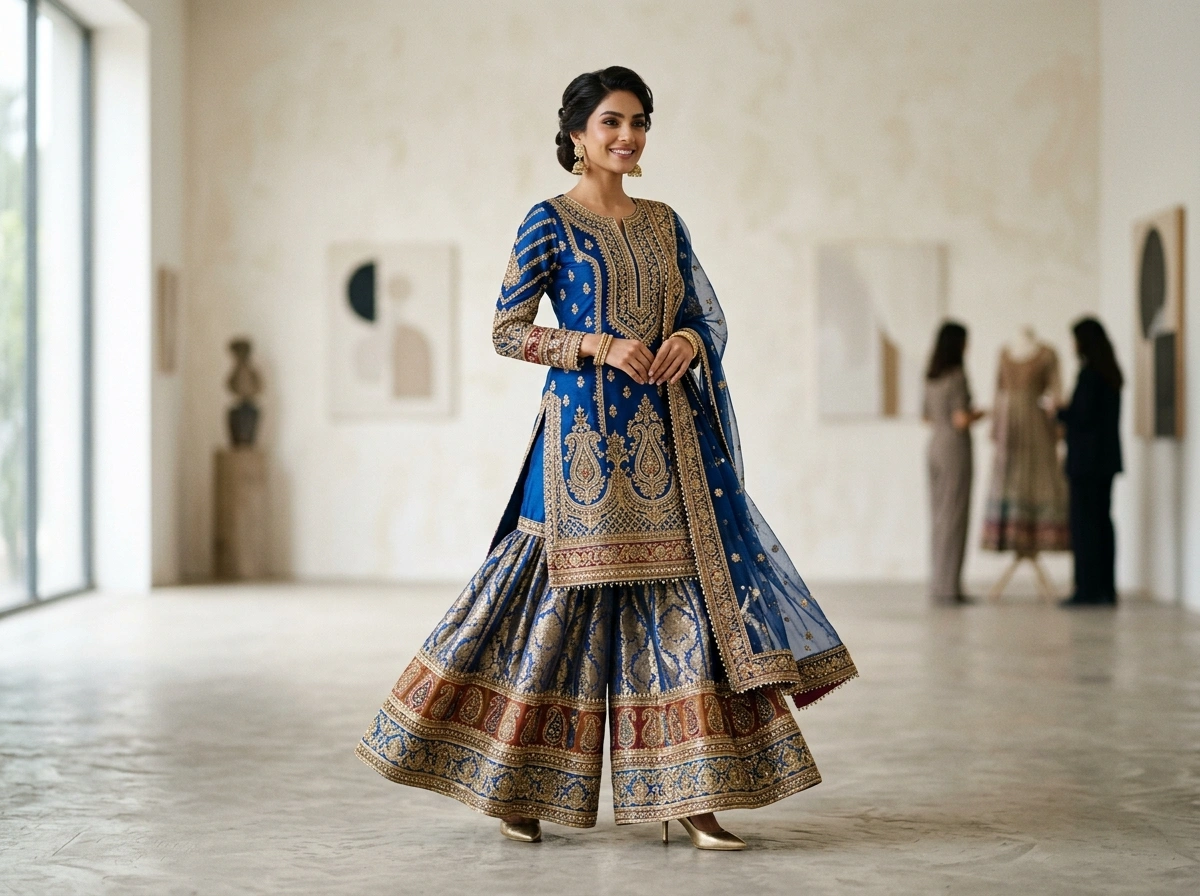
Walk into any wedding, festival celebration, or even a trendy boutique these days, and you’ll spot a familiar silhouette getting plenty of love: the sharara. This flared, flowing two-piece outfit has roots that stretch back centuries, yet it feels completely fresh right now. From Instagram feeds to red carpets, the sharara is having a real moment.
So what’s driving this revival? And how can you wear it without feeling like you stepped out of a history book? In this post, you’ll learn where the sharara comes from, why it’s trending again, how stylists are giving it a modern twist, and practical tips for pulling off the look yourself.
What Exactly Is a Sharara?
A sharara is a traditional South Asian ensemble made up of three core pieces: a fitted top called a kurti, a pair of wide-legged, heavily flared pants, and a flowing scarf known as a dupatta. The pants flare out dramatically from the knee, creating a dreamy, skirt-like effect when you move.
People often confuse it with a gharara, but there’s a key difference. A gharara flares from the knee with a gathered seam, while a sharara flares smoothly from the waist down. Both are gorgeous, but the sharara’s clean drama is what’s catching the eye of modern designers.
Key takeaway: The sharara’s wide-leg flare is its signature, and that bold silhouette is exactly why it stands out in today’s fashion crowd.
The Historical Roots of the Sharara
The sharara traces its origins to the Mughal era, where it was worn by royalty and nobility across the Indian subcontinent. Awadhi courtesans and aristocratic women in Lucknow popularized the style, often crafting it from rich silks, brocades, and intricate zari embroidery.
For generations, the sharara symbolized elegance, status, and craftsmanship. It wasn’t fast fashion. Each piece took skilled artisans weeks to embroider by hand. That heritage of quality still shapes how people view the garment today.
By the mid-20th century, the sharara had spread across South Asia and into the wardrobes of diaspora communities around the world, including here in the United States. It became a staple at weddings and Eid celebrations, passed down through families like a treasured heirloom.
Why the Sharara Is Trending Again
Fashion runs in cycles, and right now the pendulum has swung firmly back toward statement-making, culturally rich pieces. The sharara checks every box. Here’s what’s fueling its comeback.
A Hunger for Heritage and Authenticity
Younger shoppers, especially Gen Z and millennials, want clothing with a story. They’re drawn to pieces that connect them to their roots or introduce them to new cultures. The sharara delivers that depth in a way mass-produced fast fashion simply can’t.
The Rise of Fusion Fashion
America’s wonderfully diverse cultural landscape has made fusion wear more popular than ever. Designers are blending traditional silhouettes with contemporary cuts, fabrics, and colors. The result feels both rooted and modern, which appeals to a wide audience.
Social Media and Celebrity Power
Platforms like Instagram, TikTok, and Pinterest have turned the sharara into a viral favorite. When a celebrity or influencer posts a stunning festive look, it can spark thousands of searches overnight. Bollywood stars and South Asian American creators have been especially influential in pushing the trend forward.
Key takeaway: The sharara’s comeback isn’t a fluke. It rides three powerful waves: a love of heritage, the fusion fashion boom, and social media buzz.
How the Sharara Is Styled Today
The modern sharara looks very different from its Mughal-era ancestor, and that’s a good thing. Designers and stylists are reimagining it for every kind of occasion. If you want to explore the range of styles available, a quick look at a dedicated sharara dress collection shows just how versatile the silhouette has become.
Fusion Looks for Everyday Wear
You no longer need a wedding invitation to wear a sharara. Stylists are pairing flared sharara pants with cropped tops, denim jackets, or simple solid-color blouses for a casual yet striking outfit. Swapping heavy embroidery for lightweight cotton or linen makes the look wearable for brunch, parties, or even the office.
Bridal and Festive Glamour
The sharara still reigns supreme at weddings and festive events. Brides and bridal parties love it for the regal sweep of the flared pants and the photogenic movement it creates. Pastel palettes, metallic threadwork, and crystal embellishments are dominating the bridal scene right now.
Celebrity-Inspired Statement Pieces
Bold colors, dramatic dupattas, and mix-and-match separates are everywhere on social media. Think emerald green paired with gold, or a monochrome sharara dressed up with chunky contemporary jewelry. These looks prove the garment can feel runway-ready, not just traditional.
Tips for Wearing a Sharara
Ready to try the trend? These practical pointers will help you wear a sharara with confidence, whether it’s your first time or your fiftieth.
- Pick the right occasion. Lightweight cotton or georgette shararas suit daytime events, while silk and heavily embroidered versions shine at weddings and formal celebrations.
- Get the length right. The flared pants should graze the floor or sit just above it. Too short looks unfinished, and too long becomes a tripping hazard.
- Balance your proportions. Because the pants are so voluminous, pair them with a fitted or cropped top to keep the silhouette flattering.
- Choose footwear that disappears. Heels or wedges add height and let the flare drape beautifully. Keep shoes simple so the outfit stays the star.
- Accessorize with intention. Statement earrings or a bold cuff complement the look without overwhelming it. Let the embroidery do most of the talking.
- Mind the dupatta. Drape it over one shoulder for a classic feel, or skip it entirely for a more modern, streamlined vibe.
Key takeaway: A great sharara look comes down to fit and balance. Nail the proportions, and the rest falls into place.
Common Mistakes to Avoid
Even a beautiful outfit can fall flat with a few missteps. Watch out for these:
- Overloading on accessories. A heavily embellished sharara needs minimal jewelry, not a full set.
- Ignoring tailoring. An ill-fitting waistband ruins the drape. A quick visit to a tailor is always worth it.
- Forcing a mismatched top. The kurti or blouse should complement the pants in color and weight, not compete with them.
Who This Look Is For
The sharara works for almost everyone, which is part of its appeal. It flatters a range of body types thanks to its forgiving flare, and it adapts to both grand celebrations and laid-back outings. Whether you’re reconnecting with your heritage, attending a friend’s wedding, or simply love a dramatic silhouette, there’s a sharara out there for you.
That said, if you prefer minimalist, body-hugging styles, the sharara’s volume might feel like a lot. In that case, a more streamlined fusion version with slimmer flares could be the perfect middle ground.
Final Thoughts
The sharara’s return isn’t just a passing fad. It reflects a deeper shift toward fashion that celebrates culture, craftsmanship, and individuality. With designers reinventing it for modern tastes and celebrities keeping it firmly in the spotlight, this iconic silhouette is here to stay.
Your next step is simple: explore a few styles, find a flare that speaks to you, and book a quick tailoring appointment to get the fit just right. Whether you wear it to a wedding or dress it down for a weekend out, the sharara lets you make a statement that’s both timeless and totally now.
