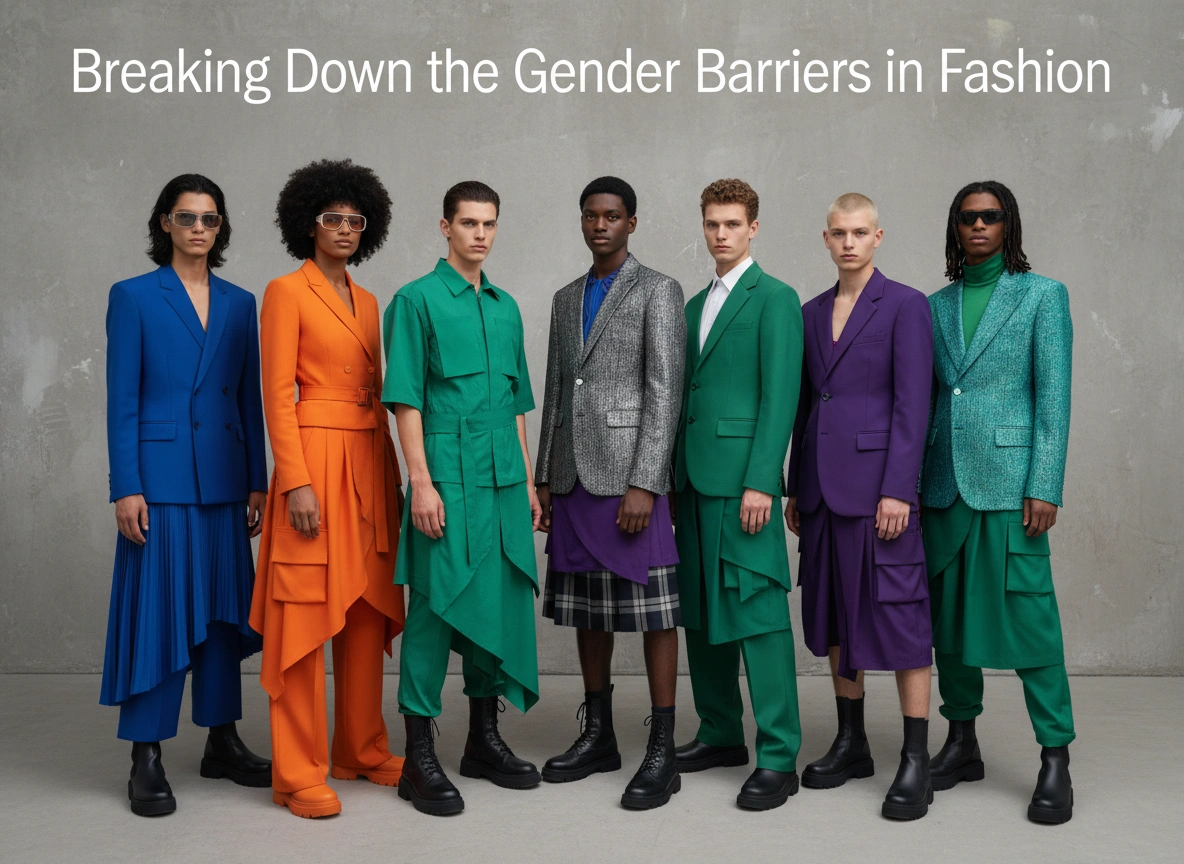
The lines that once clearly defined “menswear” and “womenswear” are becoming increasingly blurred. What was once a rigid binary is now a fluid spectrum, with fashion leading the charge in challenging traditional gender norms. This shift is more than just a passing trend; it reflects a deeper cultural evolution toward greater inclusivity and self-expression. The article will explore the historical context of gendered clothing, chart the rise of gender-neutral fashion, and examine the impact of this movement on designers, brands, and society as a whole.
The Historical Threads of Gendered Clothing
For centuries, clothing has been a primary signifier of gender, class, and social status. While we now associate certain garments with specific genders—dresses for women, trousers for men—these associations are relatively modern constructs. In many ancient cultures, garments like tunics, robes, and togas were worn by all, with distinctions arising from material quality and embellishments rather than gender.
The concept of distinctly gendered clothing began to solidify in Western cultures around the 14th century. Men’s hemlines rose dramatically, leading to the development of hose and eventually trousers, while women’s attire remained long and voluminous. This divergence intensified over the following centuries. The 19th century, in particular, cemented a strict dress code. Men’s fashion became sober and uniform, emphasizing practicality and professionalism, while women’s clothing, with its corsets, bustles, and elaborate decoration, was designed to highlight a delicate and domestic ideal.
These sartorial rules were not just about aesthetics; they were about enforcing social roles. Trousers gave men physical freedom for labor and public life, while restrictive dresses literally and figuratively kept women confined to the private sphere. Breaking these codes was often met with social ostracism or even legal repercussions.
Unraveling the Binary: Key Moments and Movements
The 20th century saw the first significant cracks appear in fashion’s rigid gender structure. Catalyzed by social change, war, and pioneering individuals, the journey toward gender fluidity in fashion began.
The Rise of Androgyny in the 20th Century
World War I and II played an unexpected role in shifting fashion norms. With men at war, women entered the workforce in unprecedented numbers, adopting practical, traditionally masculine attire like trousers and overalls out of necessity. Designers like Coco Chanel capitalized on this shift, championing a more relaxed and boyish silhouette for women in the 1920s. She popularized trousers, jersey suits, and dropped waistlines, liberating women from the corset and introducing a new language of female elegance rooted in comfort and mobility.
The counterculture movements of the 1960s and 70s further propelled androgynous style into the mainstream. The “Peacock Revolution” saw men embrace bold colors, floral prints, and flamboyant silhouettes previously reserved for women. Rock stars like David Bowie, with his Ziggy Stardust persona, and Mick Jagger challenged masculine stereotypes with makeup, high heels, and gender-bending outfits, proving that style could be a powerful tool for identity exploration.
The Influence of Grunge and Minimalism
In the 1990s, the grunge movement offered a different take on genderless dressing. Led by figures like Kurt Cobain, who often wore floral dresses and oversized cardigans, grunge fashion was characterized by a deliberate carelessness. The uniform of ripped jeans, flannel shirts, and band tees was accessible to everyone, regardless of gender. This anti-fashion stance dismantled glamour and promoted an aesthetic where individuality trumped conformity.
At the same time, minimalist designers like Calvin Klein and Helmut Lang presented a clean, utilitarian vision. Klein’s iconic CK One fragrance campaign featured a diverse cast of waifish models in simple jeans and t-shirts, marketing a single product to both men and women. This approach defined an era and normalized the idea of a shared, unisex wardrobe.
Designers and Brands Championing Inclusivity
Today, a growing number of designers and brands are placing gender inclusivity at the core of their philosophy. They are moving beyond the occasional unisex capsule collection to create entire lines that defy categorization.
The Pioneers of Gender-Fluid Design
Designers like Rad Hourani made history in 2013 by becoming the first to present a unisex haute couture collection in Paris. His work is based on architectural, seasonless, and genderless principles, offering a blueprint for a truly neutral aesthetic. Similarly, brands like Telfar, famous for its “Bushwick Birkin” bag, operate under the motto, “It’s not for you—it’s for everyone.” Their approach democratizes luxury and builds a community around shared values rather than demographic targets.
Luxury houses are also responding to the call. Gucci, under the creative direction of Alessandro Michele, played a pivotal role in reintroducing androgyny to the high-fashion stage. His collections, featuring lace, pussy-bow blouses, and floral suits for men, sparked a global conversation and gave mainstream permission for masculine-presenting individuals to embrace femininity.
The Rise of Dedicated Gender-Neutral Brands
Beyond the runway, a new wave of direct-to-consumer brands is emerging with a specific focus on gender-free clothing. Labels such as Official Rebrand, which upcycles and reimagines existing garments, and Wildfang, which creates menswear-inspired clothing for female and non-binary bodies, are catering to a generation that sees gender as a spectrum. These brands are not just selling clothes; they are fostering communities and providing a sense of belonging for those who have long felt unrepresented by the traditional fashion industry.
The Cultural Impact and the Road Ahead
The breakdown of gender barriers in fashion is having a profound impact that extends far beyond our closets. It challenges long-held societal beliefs about identity and expression.
When celebrities like Harry Styles wear a dress on the cover of Vogue or Billy Porter graces the red carpet in a tuxedo gown, it creates powerful moments of visibility. These acts defy convention and send a clear message: there is no right or wrong way to express your identity. For young people, particularly those exploring their gender identity, this representation can be life-affirming, offering validation and reducing feelings of isolation.
Moreover, the shift toward gender inclusivity is forcing the industry to rethink its entire infrastructure. From store layouts and e-commerce filters to marketing campaigns and sizing charts, brands must adapt to a more fluid consumer landscape. The traditional separation of “men’s” and “women’s” departments is slowly becoming outdated, with some retailers experimenting with integrated shopping experiences.
The future of fashion is undeniably inclusive. As conversations around gender identity continue to evolve, the demand for clothing that allows for authentic self-expression will only grow. This movement is not about erasing gender but about expanding its definitions, offering everyone the freedom to choose how they present themselves to the world. By unpicking the threads of outdated binaries, fashion is not just changing what we wear—it is helping to shape a more accepting and equitable society for all.
Please vist this website for more info
