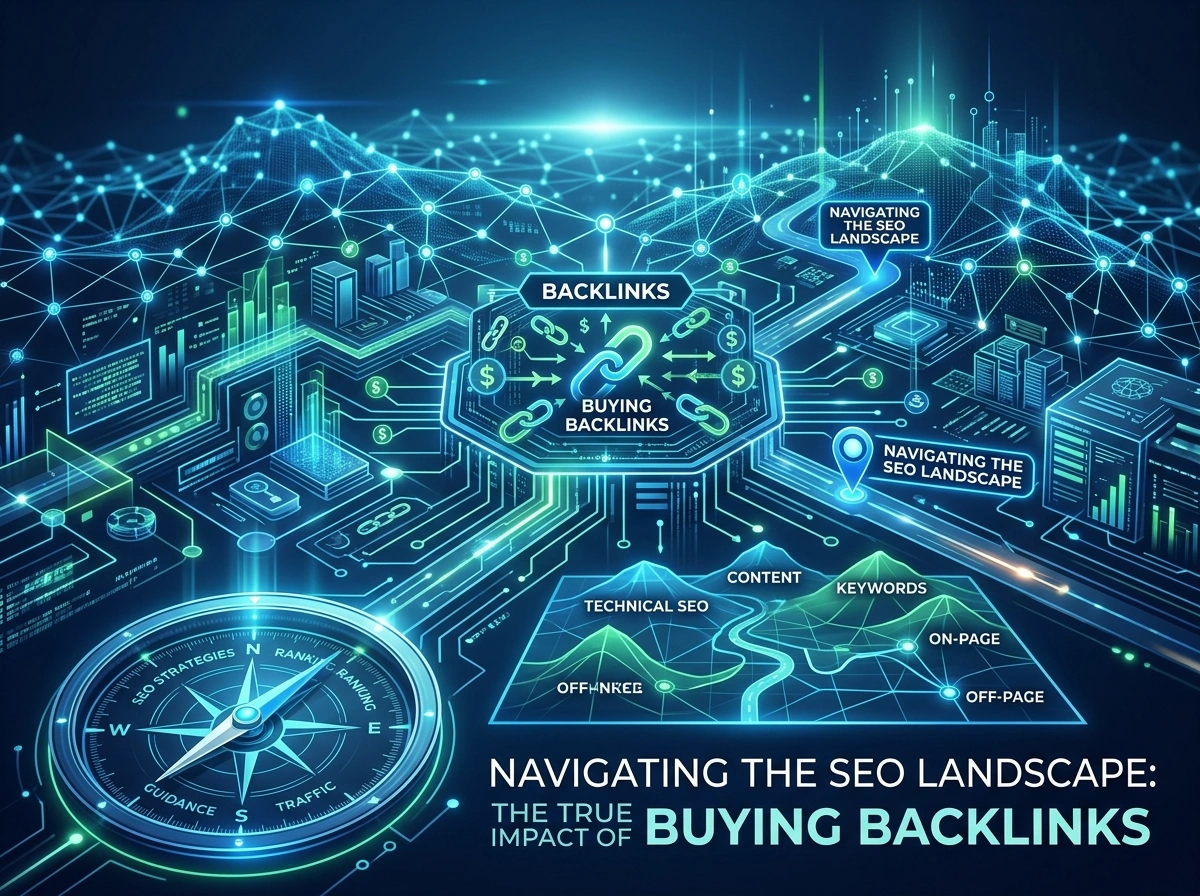
Search engine optimization often feels like a moving target. Google updates its algorithms thousands of times a year, constantly shifting the goalposts for website owners and digital marketers. Amid all these changes, one foundational element has remained a primary indicator of a website’s authority: the backlink. When a reputable site links to your pages, search engines view it as a vote of confidence, signaling that your content is valuable, trustworthy, and worthy of higher rankings.
Acquiring these digital endorsements naturally takes a massive amount of time, resources, and relationship building. You have to craft exceptional content, conduct tedious outreach, and hope that webmasters eventually notice your efforts. Because of this slow and unpredictable timeline, many businesses seek alternative routes to accelerate their growth.
Purchasing links has emerged as a popular, albeit highly debated, strategy to bypass the traditional waiting game. By exchanging capital for guaranteed placements, website owners aim to secure the authority they need to compete in crowded search results. However, this strategy is heavily nuanced and requires a deep understanding of how search algorithms process different types of digital endorsements.
If you are considering investing your marketing budget into a link-building campaign, you need to understand exactly what you are getting into. This guide explores how purchased links influence search engine algorithms, the critical differences between good and bad link profiles, and the necessary steps to protect your domain while accelerating your organic traffic.
Understanding the Impact of Buying Backlinks
To grasp why businesses spend money on backlinks, you first need to look at the economics of modern SEO. Securing organic traffic is highly lucrative, often yielding a better long-term return on investment than paid advertising. However, ranking for commercial keywords requires a domain authority that new or mid-sized websites simply do not possess.
Organic link building is inherently unpredictable. You might spend thousands of dollars on a comprehensive outreach campaign and only secure a handful of placements. Buying links directly solves this predictability problem. It transforms link building from a game of chance into a scalable, guaranteed transaction. Marketers can allocate a specific budget and know exactly how many placements they will receive, what the minimum domain metrics will be, and when the links will go live.
Search engines, particularly Google, officially discourage the practice of exchanging money for links that pass PageRank. Their guidelines state that such links should be tagged with a “rel=sponsored” or “rel=nofollow” attribute to prevent them from influencing search results. Despite these guidelines, the practice remains widespread because, when executed with extreme care and focus on quality, it successfully moves the needle for competitive keywords.
How Purchased Backlinks Affect Search Engine Rankings
Search engine algorithms do not have a magical detector that instantly flags a link as “purchased.” Instead, they evaluate a complex matrix of signals to determine if a link appears natural and relevant. When you acquire a link, the algorithm looks at the linking domain’s authority, the relevance of the surrounding content, the anchor text used, and the overall link velocity of your website.
If a purchased link is placed on a high-authority domain within a contextually relevant article, the algorithm processes it exactly as it would a naturally earned link. The PageRank flows from the referring domain to your site, boosting your page’s perceived authority. Consequently, your target page is more likely to climb the search engine results pages (SERPs) for its primary keywords.
Conversely, if a purchased link appears on a low-quality site, a known link farm, or within content entirely unrelated to your niche, the algorithm’s response will be vastly different. Google’s SpamBrain AI is highly adept at identifying unnatural linking patterns. If it determines that your link profile is artificially inflated with low-quality placements, it will devalue those links. This means the links will provide zero ranking benefit, rendering your investment worthless.
Quality vs. Quantity in Link Building
A common trap for inexperienced marketers is focusing strictly on link volume. It is easy to be tempted by offers that promise thousands of backlinks for a few dollars. However, in the modern SEO landscape, link quality exponentially outweighs link quantity.
A single backlink from a highly respected, authoritative website with genuine organic traffic can push your site further up the rankings than five hundred links from obscure, low-quality directories. Search engines prioritize trust. When assessing a link, they look at metrics like Domain Rating (DR), organic traffic trends, and the site’s outbound link ratio.
Quality link building focuses on niche relevance. If you run a financial software company, a link from a respected accounting blog carries significantly more weight than a link from a generic lifestyle magazine. When evaluating campaigns, prioritize contextual placements on websites that share topical alignment with your industry. High-quality links are embedded naturally into well-written, informative content that actually serves the reader, rather than existing solely to house an anchor text.
Risks and Rewards of Buying Backlinks
Engaging in paid link building is essentially an exercise in risk management. Understanding both sides of the coin is vital for any business looking to scale its organic presence.
The Inherent Risks
The most significant risk associated with buying links is incurring a search engine penalty. If Google’s manual review team or automated algorithms detect a blatant violation of their spam policies, your site can suffer a manual action. This results in your website being pushed down the rankings or, in severe cases, completely de-indexed from search results.
Another major risk is budget waste. Many dubious vendors sell placements on Private Blog Networks (PBNs). These are networks of sites created specifically to sell links. Because these sites offer no real value to users, search engines actively hunt them down and devalue them. If you spend your marketing budget on PBN links, you will likely see your rankings plummet the moment a new algorithm update rolls out.
The Strategic Rewards
When executed correctly, the rewards of a paid link campaign can be transformative. The primary benefit is speed. Instead of waiting months or years to build enough authority to compete, you can aggressively scale your domain’s power in a matter of weeks. This accelerated timeline leads to faster traffic growth, more leads, and increased revenue.
Furthermore, purchasing links allows for precise control over your anchor text strategy. You can strategically target the exact commercial keywords that drive revenue for your business. When you choose to buy backlinks from a reputable agency with a proven infrastructure, you gain access to high-DR placements and predictable, guaranteed results that directly impact your bottom line.
Best Practices for Modern Link Building
If you decide to allocate a portion of your budget toward acquiring links, you must follow strict best practices to protect your domain and ensure a positive return on investment.
First, heavily vet any vendor or agency you work with. Ask for examples of past placements and verify that the domains have genuine organic traffic. Real websites have traffic graphs that show steady or growing visibility over time, whereas link farms often display sharp drops indicating algorithmic penalties.
Second, maintain a natural anchor text profile. If every single backlink pointing to your site uses exact-match commercial keywords, it creates an obvious footprint for search engines to penalize. Mix your anchor text with branded terms, naked URLs, and generic phrases (like “click here” or “read more”) to ensure the profile looks completely organic.
Finally, never neglect your own on-page content. A backlink only amplifies the quality of the destination page. If you build links to thin, unhelpful, or poorly optimized content, the ranking boost will be minimal and short-lived. Ensure your pages satisfy search intent and provide an excellent user experience before you invest in external authority.
Frequently Asked Questions
Are purchased links safe from Google penalties?
Safety entirely depends on the quality of the placement and the methods used to acquire it. Links placed on real, authoritative websites with genuine traffic and strict editorial standards are generally safe and highly effective. Links from PBNs, automated spam tools, or irrelevant link farms carry a high risk of algorithmic devaluation or manual penalties.
How long does it take to see an increase in organic traffic?
SEO is a long-term strategy, and patience is required even when building high-quality links. Typically, it takes anywhere from 30 to 60 days for search engines to crawl the new links, recalculate your domain’s authority, and adjust your rankings in the SERPs.
Can I approve the links before they go live?
Top-tier link-building agencies usually offer an approval process. This allows you to review the domain metrics, traffic history, and relevance of the target site before the content is published. Reviewing placements ensures they align perfectly with your brand’s standards and SEO goals.
Next Steps for Your SEO Strategy
Navigating the complexities of link building requires a delicate balance of aggression and caution. Earning links organically will always be the safest and most recommended approach by search engines. However, the realities of digital competition often require businesses to take proactive measures to build their authority.
If you choose to accelerate your growth through purchased placements, prioritize quality, relevance, and transparency above all else. Treat your backlink profile as a long-term asset that requires careful cultivation. By pairing high-quality contextual links with exceptional, user-focused content, you can safely boost your search engine rankings, drive targeted organic traffic, and secure a lasting competitive advantage in your industry.
