Picking the right cannabis strain can feel overwhelming. Dispensary menus often list dozens of options, each with unfamiliar names and a wall of percentages. The good news? You don’t need to memorize botany to make a smart choice.
The trick is to flip the question. Instead of asking “What is this strain?” ask “What do I want to feel and do?” When you match a strain to your mood, your activity, and the time of day, the whole process gets simpler and a lot more enjoyable.
This guide walks you through a practical framework anyone can use. We’ll cover how to browse strains by emotional state, by what you have planned, and by the hour on the clock. You’ll also find tips for first-timers and seasoned users alike, plus a clear next step to put it all into practice.
Why Mood, Activity, and Time Matter More Than Strain Names
Strain names are inconsistent across states and brands. A “Blue Dream” in California might feel different from one in Michigan, thanks to varied growing conditions and lab testing standards.
What stays more reliable is your goal. Effects are shaped by cannabinoids like THC and CBD, plus aromatic compounds called terpenes. These work together to influence how relaxed, alert, or social you feel.
By focusing on outcomes—how you want to feel and what you want to do—you sidestep marketing hype and confusing labels. The takeaway: start with your intention, then let the product details confirm your pick.
How to Browse Strains by Mood
Your mood is one of the easiest starting points. Most people already know whether they want to chill out, lift their spirits, or sharpen their focus.
Relaxed and Calm
If you want to melt into the couch and quiet a busy mind, look for strains described as soothing or body-heavy. These often carry the terpene myrcene, known for its mellow, grounding feel.
These picks suit anyone winding down after a long shift or dealing with everyday stress.
Euphoric and Uplifted
Some days call for a brighter outlook. Strains labeled uplifting or mood-boosting tend to spark a sense of happiness and lightness.
Limonene, a citrusy terpene, frequently shows up in these options. It’s a popular choice for social settings or shaking off a gloomy afternoon.
Focused and Clear-Headed
Need to power through a project without feeling foggy? Look for strains marketed as clear or energizing, often with lower THC and a balanced cannabinoid profile.
These can help some users stay on task, though everyone reacts differently.
Creative and Inspired
Artists, writers, and brainstormers often seek that spark of new ideas. Strains tied to creativity may combine an uplifting head feel with gentle focus.
The takeaway: name your mood first, then scan product descriptions and terpene profiles for a match.
How to Choose Strains by Activity
What you plan to do matters just as much as how you feel. The right strain for a hike is rarely the right strain for bedtime.
Socializing
For game nights, parties, or dinner with friends, many people prefer uplifting, talkative effects. You want something that loosens you up without overwhelming you.
Lighter THC levels often work best here, helping you stay engaged and comfortable in a group.
Exercising and Outdoor Activity
Some users enjoy a strain before a walk, yoga session, or bike ride. Energizing options with a clear-headed feel tend to pair well with movement.
Start low and go slow—physical activity can intensify effects, especially in warm climates.
Working and Productivity
For focused tasks, balanced strains with milder potency usually help more than heavy-hitting options. The goal is gentle motivation, not distraction.
If you’re new to using cannabis during the day, test it on a low-stakes afternoon first.
Unwinding at Home
When the plan is simply to relax, lean toward calming, body-focused strains. These are great for streaming a show, taking a bath, or reading.
The takeaway: match the strain’s energy to your activity’s energy. High-movement plans call for clarity; downtime calls for calm.
How to Select Strains by Time of Day
Timing shapes your experience. Your body’s natural rhythm—and your schedule—should guide what you reach for.
Morning
Mornings usually call for clarity and gentle energy. Look for uplifting, clear-headed strains that won’t leave you sluggish.
Keep doses light so you can move through your day with focus.
Afternoon
The afternoon is flexible. A balanced strain can carry you through errands, work, or a midday break without tipping you toward either extreme.
This is a smart window to experiment, since you have hours to observe how you feel.
Evening and Night
As the day winds down, calming and sedating strains shine. These help you transition toward rest and can support a smoother bedtime routine.
Avoid heavy evening doses if you have early plans, since deep relaxation can linger.
The takeaway: think of strains like coffee versus chamomile tea. Energizing in the morning, soothing at night.
Tips for New and Experienced Users
A few simple habits make every session better, no matter your experience level.
For New Users
- Start low and go slow. Begin with a small amount and wait before taking more.
- Read the label. Check THC, CBD, and terpene details rather than relying on the name alone.
- Keep notes. Track what you tried, how much, and how you felt.
- Know your local laws. Cannabis regulations vary widely by state, so confirm what’s legal where you live.
For Experienced Users
- Rotate your options. Tolerance builds, so mixing up strains keeps effects fresh.
- Use a trusted resource. When you want detailed effect and terpene data, you can browse strains to compare profiles before you buy.
- Match to context. Fine-tune your choices using the mood, activity, and time framework for more consistent results.
The takeaway: intention plus a little record-keeping turns guesswork into a reliable routine.
A Quick Framework You Can Use Today
Before your next purchase, ask yourself three questions:
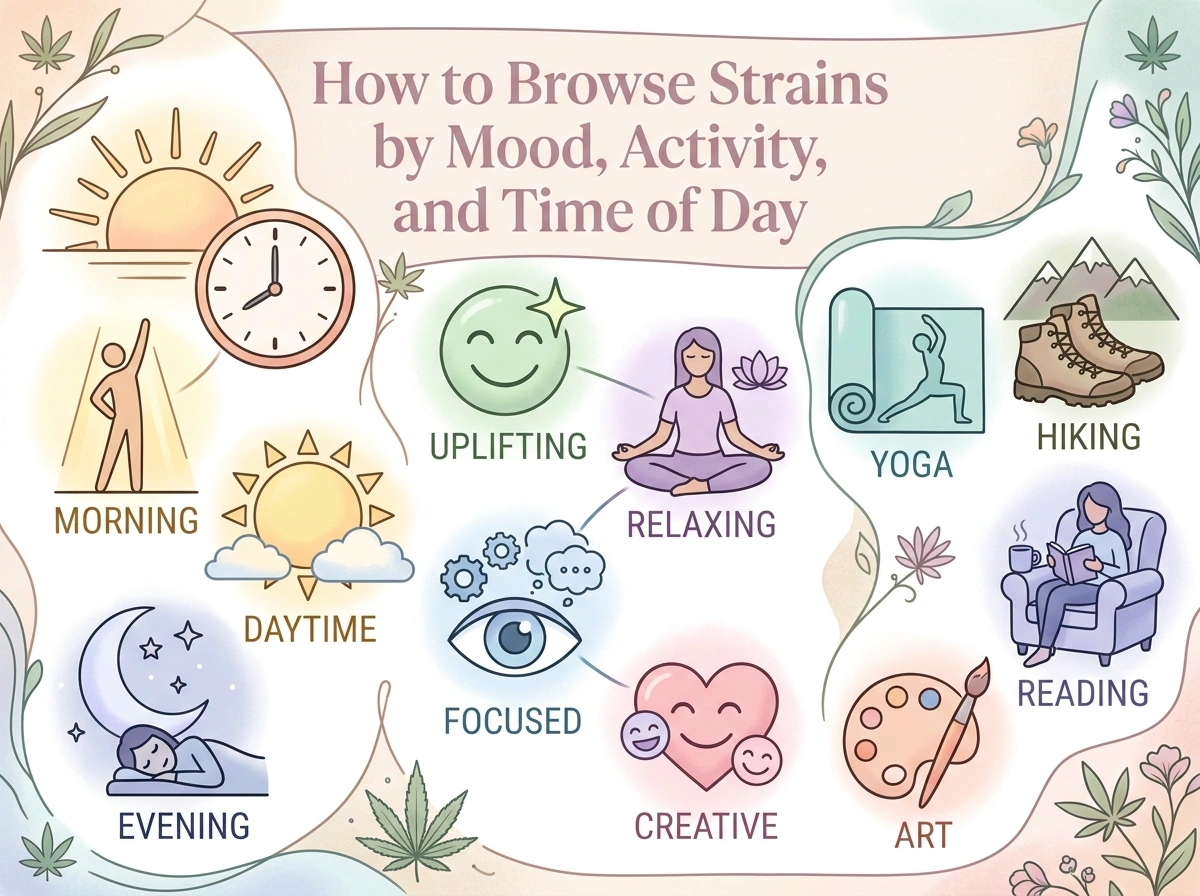
- How do I want to feel? (relaxed, euphoric, focused, creative)
- What am I doing? (socializing, exercising, working, unwinding)
- What time is it? (morning, afternoon, evening)
Line up your answers, then look for a product whose description and terpenes match all three. This simple checklist works whether you’re shopping in person or online.
Conclusion
Choosing the right strain doesn’t have to be complicated. When you lead with your mood, your activity, and the time of day, you replace confusion with confidence. Instead of chasing trendy names, you make choices that actually fit your life.
Remember the basics: start low, read your labels, keep notes, and always follow the cannabis laws in your state. These habits protect your experience and help you get the results you want.
Ready to put this framework into action? Use the three-question checklist on your next visit, compare effects and terpene profiles, and find the option that suits your moment. With a little intention, every session can feel tailored to you.
